Before, During and After a Remodel
How Long a Viking Dishwasher Replacement Really Takes
Replacing a dishwasher takes one to three hours in the same opening; a panel-ready unit can take half a day. Viking Appliance Repair Denver, (720) 770-4189.
Written by Natalia Vukovic
Role Service technician — water systems and leaks · 17 years in the trade
In the trade Finds where the water goes before deciding what is wrong. A seal that shrank at the corner and a fitting that weeps look the same on the floor and cost nothing alike.
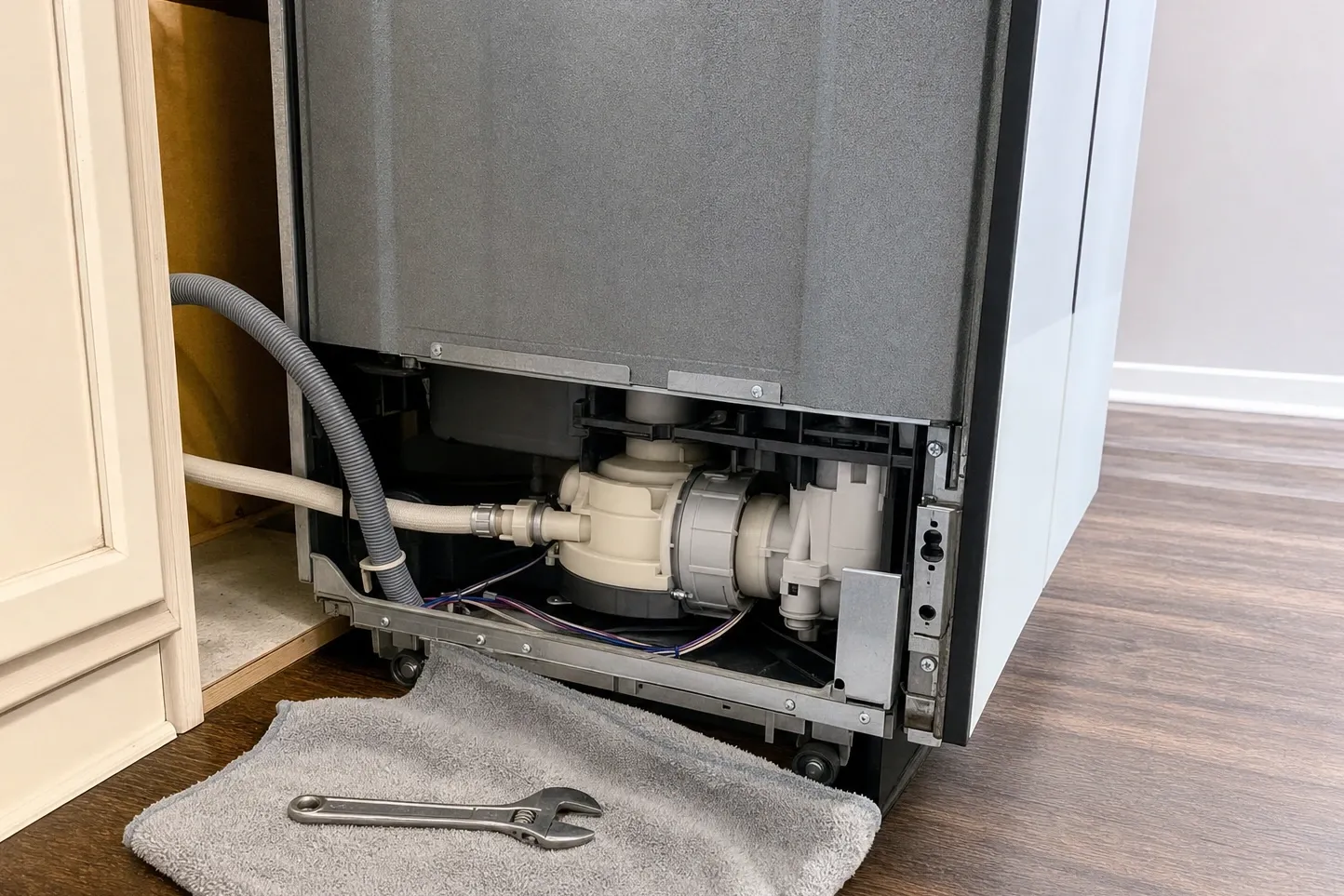
A straight swap, meaning the old dishwasher comes out and a new one goes into the same opening with the water valve, drain and power already in good order, normally takes one to three hours of hands-on work. Add time if the new machine is panel-ready: hanging and squaring a custom cabinet front on a Viking door can push the job toward half a day. If the plan moves the dishwasher, needs a new circuit or opens up the sink-base plumbing, expect a full day or visits from more than one trade. In a Highland or Washington Park house whose kitchen has been redone more than once, the under-sink shutoff and the floor height are the two things most likely to stretch that estimate, so look at both before the delivery is scheduled.
Where the hours actually go
Very little of an ordinary replacement is the moment the new box slides in. The work falls into four stretches:
- Closing the hot-water valve and the breaker, then freeing the supply line, the drain hose and the wiring at the junction box or plug.
- Releasing the mounting brackets, easing the old unit out over protected flooring and looking inside the empty opening for old leak stains, soft subfloor or mold.
- Preparing the new machine with a fresh supply line and elbow, routing the drain and making the electrical connection, then feeding everything through as the unit goes home.
- Leveling, fastening the brackets, and running a full cycle while someone watches every joint with a flashlight.
That last stretch deserves patience. A fitting that weeps slowly will not show itself in the first five minutes, and the cheapest moment to catch it is before the toe kick goes back on.
| Situation | Realistic time on site |
|---|---|
| Same size, same spot, healthy connections | One to three hours |
| Panel-ready unit taking your existing custom front | About half a day |
| New location, new circuit or replumbed sink base | A full day or more, often split between trades |
Why a panel-ready Viking takes longer
Integrated Viking dishwashers hide behind a door panel built to match the cabinetry. Whoever installs one has to move that panel from the old door or mount a new one, line its edges up with the drawers on either side, and then rebalance the door springs so a heavy wooden front neither drops open nor drifts shut. The toe kick usually needs trimming or resetting to the new machine’s height as well. None of this is hard, but every adjustment means opening the door, tweaking a screw and opening it again. Our notes on fitting a custom panel and toe kick list the reveals and dimensions worth confirming before the old unit leaves the kitchen.
Surprises that turn one afternoon into two visits
A handful of discoveries reliably stretch the clock:
- A valve that will not close. Shutoffs under older sinks can be seized solid or start dripping once they are turned. Swapping one is plumbing work, and the water to the whole house has to go off first.
- Floors laid around the old machine. When tile or hardwood went down up to the dishwasher instead of under it, the opening lost the thickness of that new floor. The old unit can end up pinned beneath the counter, and its replacement has to fit the reduced height.
- Stone counters. Granite and quartz do not take screws, so the unit gets anchored through side brackets into the neighboring cabinets instead.
- A disposal knockout left in place. When the dishwasher drains through a newly fitted disposal, the plug inside that inlet must be knocked out first, or the tub sits full of gray water after its first run.
Viking’s own manual for 325 Series machines built before 05/26/10 names much the same suspects when a Drain Timeout appears: the sink drain and disposal plug, a clogged or kinked hose, the high loop, leveling and the filters. Whether your new drain line should use a high loop or an air gap is its own decision, covered in high loop or air gap for a Denver remodel.
Worn out, or one bad part?
Most dishwashers are expected to give around a decade of service, with care and water quality nudging that number in both directions. Replacement starts to make sense when several symptoms arrive together: rust spots on the tub or inner door, racks shedding their coating, a door gasket that no longer seals, and a second or third repair landing within a short stretch. That cluster says the whole machine is aging, not that one component quit.
A single fault reads differently. On Viking 3, 5 and 7 Series machines with VDWU and FDWU model numbers, E:02 means the water supply has been cut off, and the program carries on once water returns, so a half-closed supply valve deserves a look first. E:01 is the overfill or leak alarm: the machine has found water where it should not be and starts pumping out. If that code keeps coming back after a reset, treat it as a service call rather than a wait-and-see. Neither code alone means the machine is finished.
Typical repair ranges help settle the question. A dishwasher pump or control usually lands in the $210–$420 range, and a control board or touch panel in the $440–$660 range, with the firm figure set only once the fault is found. The diagnostic visit itself is $89 flat; agree to the repair and that sum vanishes from the final bill. Details live on our Viking dishwasher repair page, and the phone is (720) 770-4189.
Read the serial tag and the paperwork first
Before deciding anything, find the rating tag along the door edge or tub frame. Per Viking’s recall notices, a serial opens with six digits giving the month, day and year of manufacture; 082421C10019872, for instance, dates to August 24, 2021. That date matters for coverage. For the first two years Viking covers a dishwasher in full, with the clock starting at purchase or at the closing on a newly built home, whichever gives the longer term. From year three through year five it sends listed dishwasher parts only, and labor and shipping fall to the owner. Lacking a receipt or a registration, Viking simply starts the clock on the build date stamped into that serial, and skipping registration does not cost you anything.
Buying and receiving the new machine
Two warranty rules shape how you shop. Viking excludes anything bought used, refurbished or as-is, along with salvage, liquidation stock, seconds and B-stock, so a bargain open-box dishwasher may arrive with no Viking warranty whatsoever. Cosmetic flaws get a short window: 90 days, manufacturing defects only, nothing caused by handling or installation, and the claim goes to the dealer who sold it before those 90 days run out. Unpack the machine and inspect the door and side panels before it slides under the counter, because a dent noticed after the install is hard to trace.
Making the next one last
Viking wants the filters on 3 and 5 Series machines cleaned weekly or more often. The micro and coarse assembly unscrews counterclockwise and lifts free, the flat filter comes out from beneath it, and all three get a brush under the tap before going back in until they click. Rinse aid matters too. Those models dose anywhere from P:0 to P:4 and ship set at 3; turn it up when glasses come out spotted and down when a bluish streak wipes off by hand. Because Denver’s water hardness moves with the season and the source, anyone adding or removing a softener should read what a whole-house softener changes for a Viking dishwasher before resetting that dose.
One term, defined
Panel-ready dishwasher
A dishwasher built to wear a front panel made by the cabinet maker, so it disappears into the run of cabinets; installing one includes hanging that panel and rebalancing the door springs for its weight.
Spec check
Confirm each of these before anything is cut, ordered or delivered.
- Measure the opening height from the finished floor, since tile or hardwood laid after the last install can shrink it
- Turn the hot-water shutoff under the sink fully off and back on once to prove it still works
- Check whether the old machine is plugged into an outlet or wired into a junction box
- Read the build date from the serial number before choosing between a repair and a new machine
- Unbox and inspect the new door and side panels for dents before the unit goes under the counter
Questions on site? Viking Appliance Repair Denver, (720) 770-4189.
Follow-ups we get asked
Is it difficult to replace a dishwasher yourself?
It is manageable for a handy owner when the new machine matches the old opening and the connections are healthy, but there are more steps than most people expect. Water and power go off, the supply line, drain hose and wiring are moved over, then the unit is leveled, anchored and test-run. A panel-ready model adds panel hanging and spring adjustment, which is where home installs most often go wrong.
Why does a new dishwasher take about 3 hours to run a cycle?
Long cycles are the price of using less water and energy. Rather than heating a big volume of water and blasting it hard, a modern machine circulates a smaller amount for longer and lets soaking time do the work. Most models offer a quicker program that uses more energy, and a long normal cycle on its own is not a fault.
What is the typical lifespan of a dishwasher?
Around ten years is the figure most often quoted, and a well-kept machine can outlast it. Filters that never get cleaned, a drain that backs up and hard-water scale all shorten the run. Denver hardness shifts with the season and the source, so steady filter and rinse-aid habits count for more here than the badge on the door.
Should I repair or replace an older Viking dishwasher?
Repair usually wins when one component has failed and the tub, door and racks are still sound. A pump or control job typically falls in the $210–$420 range and the firm figure follows diagnosis. Replacement makes more sense when rust, leaks and repeat failures show up together, because that pattern points to a machine wearing out everywhere at once.